OSHA general industry
Crane and hoist
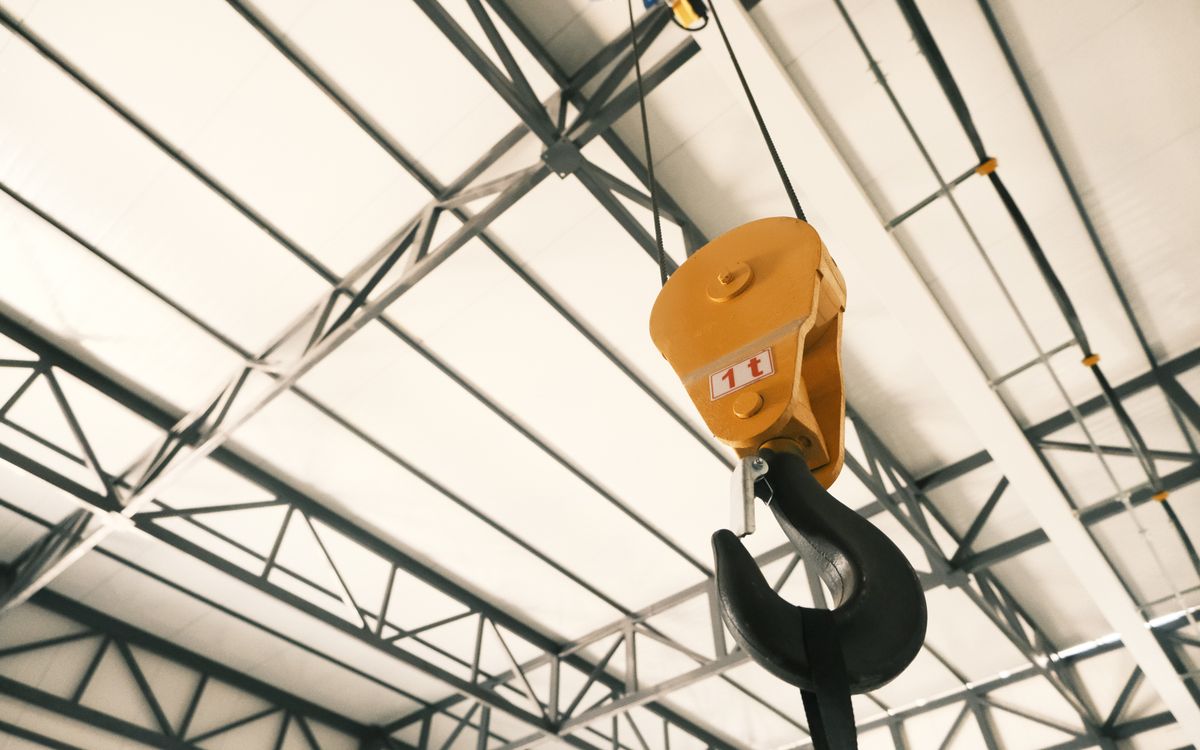
A crane and hoist is equipment in the osha general industry category. Lifting equipment and rigging inspected periodically, tagged with the last inspection and capacity.
Also called: overhead crane, chain hoist, jib crane, lifting equipment.
Governing standards
Required artifacts
| Artifact | What it does |
|---|---|
| Inspection tag | An inspection tag is a compliance consumable affixed to equipment that records who serviced it, when, and under what licence. |
| Engraved nameplate | A rigid engraved plate identifying equipment, a circuit, or a disconnect, readable for the life of the asset. |
Which of these you actually need, and on what cycle, depends on your jurisdiction. We publish that only where we have read the governing clause and can cite it. Where we have not, the page says so rather than guessing.
In stock for cranes and hoists
What it is
Overhead travelling cranes, gantries, jib cranes and hoists, with hooks, wire rope or chain, brakes and limit switches. Mounted high, in oil mist and heat, above the work they lift over.
Why it gets inspected
The load path is a chain of single points of failure and every one of them wears. A hook opening by a few degrees or rope losing a few strands is not visible from the floor, and the consequence of missing it is a dropped load.
What happens on a visit
Frequent checks daily to monthly on hooks, ropes, chains and brakes, with monthly certification records for hooks and running ropes that name the specific component. Two hooks on one crane are two records, not one.
What drives the tag count
Capacity is a fixed property of the equipment and should be imprinted at production rather than handwritten, because a handwritten capacity that is wrong is a liability rather than a record. Rigging lofts also destroy paper tags, which is why these are metal.
What actually gets tagged, and where it goes
Cranes and hoists carry inspection status at the unit and identification on the lifting equipment itself, including slings and below-the-hook devices, which are frequently the items that actually get tagged in practice. Tags have to survive an industrial environment and remain readable from the floor, often at a distance and looking upward, which argues for larger format and high contrast rather than for the compact tag that suits equipment inspected at arm's length.
What a scan of cranes and hoists shows
Lifting equipment is inspected on layered frequencies and the components move between machines, which is the same identification problem ladders have and with higher consequences. A sling used on three different hoists belongs to none of them, and a record bound to the sling rather than to the machine is the only way its history stays coherent. A scan resolves to the individual item and shows its inspection sequence and any period it was withdrawn.
Every artifact here is serialised, so the record survives the tag being replaced. The mechanics are on how inspection records work.
Sizing an order for a fleet of cranes and hoists
Count lifting equipment items rather than cranes, which usually multiplies the number substantially once slings, shackles and below-the-hook devices are included. Order withdrawal tags alongside inspection tags: as with ladders, the tag that removes a defective item from service is the one used least and needed most urgently.
Minimum is 100 units and every price is on the page, so a first order can be a test rather than a commitment. Why the minimum is 100, not 2,500.
Inspected on the same visit
Lifting equipment shares a site with scaffolds, ladders and forklifts, and shares their central problem: individual items that move between machines and locations while the paperwork stays where it was written. Slings and below-the-hook devices are the items that actually get tagged and they outnumber the cranes considerably. Count lifting items rather than cranes, order withdrawal tags alongside inspection tags for all of these families, and label the whole site in one exercise.
Ordering cranes and hoists: common questions
Do I tag the crane or the lifting equipment?
Both, and the lifting equipment is usually the larger number. Slings, shackles and below-the-hook devices move between machines, so a record bound to the sling rather than to the crane is the only way its history stays coherent. Count items rather than cranes when ordering.
What format works for overhead equipment?
Larger format and high contrast. These tags are read from the floor at a distance and looking upward, which is a different legibility problem from equipment inspected at arm’s length. A compact tag that works on an extinguisher is unreadable at height.
Do we need withdrawal tags?
Yes, and as with ladders it is the tag used least and needed most urgently. Order them alongside the inspection tags rather than separately, because the moment a defective sling is found is not the moment to discover you have none.