Fire and life safety
Fire alarm control panel
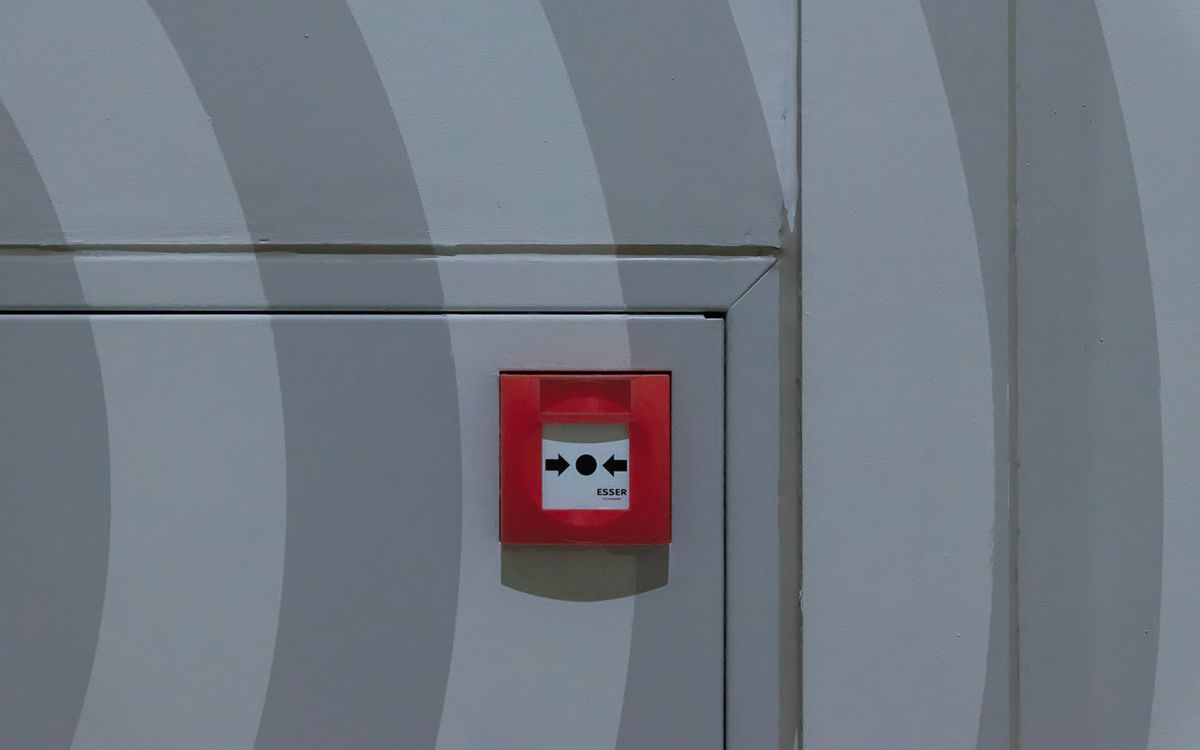
A fire alarm control panel is equipment in the fire and life safety category. Control equipment for a building fire alarm system, subject to periodic inspection and testing.
Also called: FACP, alarm panel, fire panel.
Governing standards
Required artifacts
| Artifact | What it does |
|---|---|
| Inspection tag | An inspection tag is a compliance consumable affixed to equipment that records who serviced it, when, and under what licence. |
| Service certificate | A service certificate is a compliance consumable certifying that a scheduled service was performed, displayed on the premises. |
Which of these you actually need, and on what cycle, depends on your jurisdiction. We publish that only where we have read the governing clause and can cite it. Where we have not, the page says so rather than guessing.
What it is
The control unit that supervises detectors, pull stations, notification devices and sometimes the sprinkler system. It has a display, a trouble buzzer, and batteries sized to run the system when mains power is gone.
Why it gets inspected
Panels tell you they are unhappy and are then ignored. A trouble light that has been on for months usually means a device is offline - and an offline detector is a room with no detection, in a building whose occupants believe it is covered.
What happens on a visit
Read and clear the event history, test a sample of devices by point, confirm the notification appliances sound and flash, load test the batteries, and record which points were tested rather than that testing happened.
What drives the tag count
The panel is one device but the system behind it is hundreds, and device level testing runs on staggered frequencies. That is why the record for an alarm system is longer than people expect and why a logbook at the panel is still standard practice alongside any tag.
What actually gets tagged, and where it goes
The service tag goes inside the panel door rather than on the outer face, which keeps it away from cleaning and casual contact and puts it where the next technician opens. Individual devices across the system are labelled separately for identification, and that labelling is what makes device level testing traceable. The panel environment is benign, so the specification is about print permanence over a very long service life rather than about toughness.
What a scan of fire alarm control panels shows
Alarm systems outlive the companies that install them, routinely by decades. A scan resolves to the panel and shows its testing history without depending on the installing contractor still existing, which is the failure this addresses. Per device records matter here more than almost anywhere: a system with hundreds of initiating devices cannot be honestly evidenced by one date on the panel, because that date says nothing about which devices were actually reached.
Every artifact here is serialised, so the record survives the tag being replaced. The mechanics are on how inspection records work.
Sizing an order for a fleet of fire alarm control panels
Panel tags are low volume, one or two per panel per year. Device labels are the opposite, scaling with device count into the hundreds for a single building, so they dominate the order. Size the order from the device schedule rather than from the panel count, and order device labels and panel tags together since they share an imprint and ship as one consignment.
Minimum is 100 units and every price is on the page, so a first order can be a test rather than a commitment. Why the minimum is 100, not 2,500.
Inspected on the same visit
Alarm service is often bundled with the wider life safety contract, so the visit that tests the panel and its devices is the visit that reaches the extinguishers and, in buildings with a kitchen, the hood suppression system connected to the panel. Sprinkler flow and tamper switches are monitored by the panel, which puts the riser on the same service relationship even though the inspection falls under a different standard. Device labels dominate the order, so count those from the device schedule and add the other families to the same purchase order.
Ordering fire alarm control panels: common questions
Panel tags or device labels. Which drives the order?
Device labels, by a wide margin. Panel tags are one or two per panel per year. Device labels scale with device count into the hundreds for a single building, so size the order from the device schedule rather than the panel count. Order both together since they share an imprint.
Why label individual devices?
Because a system with hundreds of initiating devices cannot be honestly evidenced by one date on the panel. That date says nothing about which devices were actually reached. Per-device records make an untested device show as untested instead of disappearing into a system-level pass.
What happens when the installing contractor is gone?
The record does not depend on them. It is bound to the equipment and readable from the QR by the building owner without an account. Alarm systems routinely outlive the companies that installed them, and a history held only in a contractor system ends when the contractor does.