Fire and life safety
Commercial kitchen hood
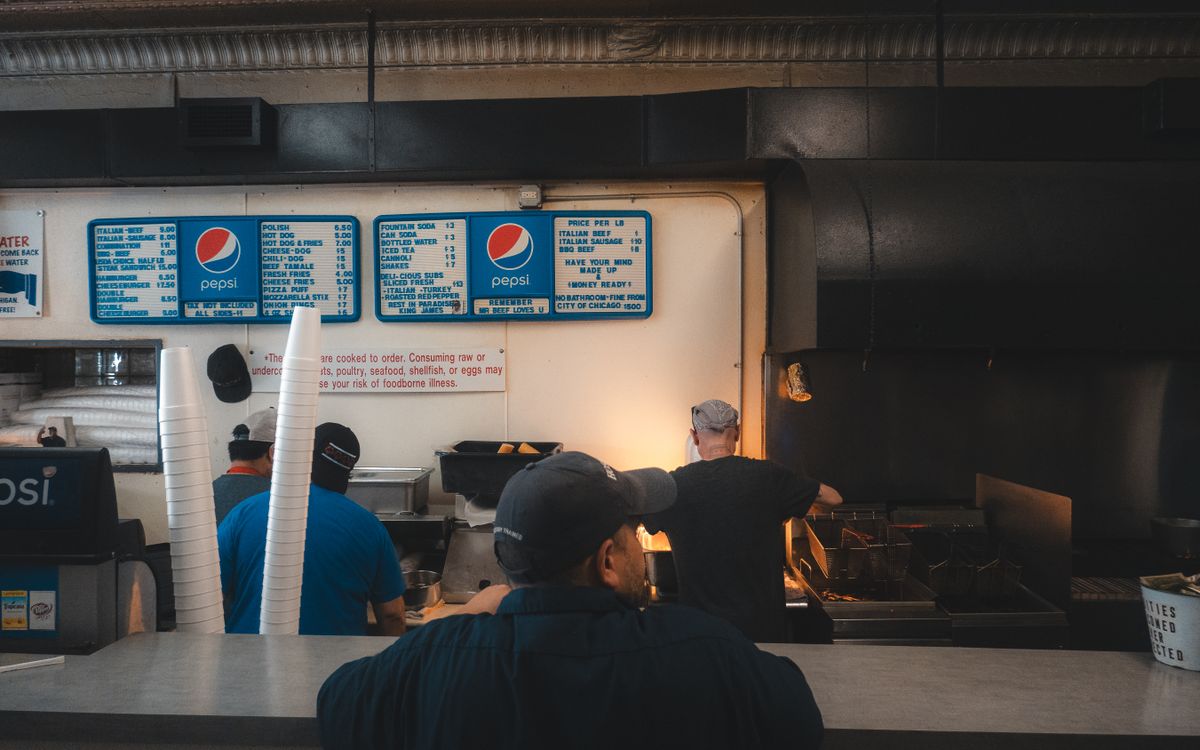
A commercial kitchen hood is equipment in the fire and life safety category. Exhaust hoods and grease ducts over commercial cooking equipment, requiring scheduled cleaning and certification.
Also called: hood, exhaust hood, grease hood, kitchen exhaust system.
Governing standards
Required artifacts
| Artifact | What it does |
|---|---|
| Service certificate | A service certificate is a compliance consumable certifying that a scheduled service was performed, displayed on the premises. |
| Service label | A service label is a compliance consumable applied directly to equipment recording a test, a certification, or a next-due date. |
Which of these you actually need, and on what cycle, depends on your jurisdiction. We publish that only where we have read the governing clause and can cite it. Where we have not, the page says so rather than guessing.
In stock for commercial kitchen hoods
What it is
The extraction canopy over a cooking line, its grease filters, the duct behind it, and usually a wet chemical suppression system with nozzles aimed at each appliance. The duct can run the height of a building.
Why it gets inspected
Grease accumulates in the duct where nobody can see it and burns extremely well. A hood fire that reaches an uncleaned duct stops being a kitchen fire and becomes a building fire. Cleaning frequency depends on what is cooked, not on the calendar.
What happens on a visit
Degrease the canopy, filters, duct and fan to bare metal, then post a certificate recording who cleaned it and when. A separate visit services the suppression system and its nozzles.
What drives the tag count
Cleaning frequency tracks cooking volume rather than the calendar, so a high volume kitchen may be monthly where a cafeteria is quarterly or annual. The certificate is displayed rather than affixed, and it is normally the first thing a health or fire inspector asks for on entry.
What actually gets tagged, and where it goes
The service tag goes on the hood or the adjacent wall where it is visible to a health or fire inspector without moving equipment, which in practice means at eye height near the end of the line rather than above the fryer. The wet chemical suppression system over the line carries its own separate tag on its own schedule, and conflating the two is a common and consequential error. Grease and caustic cleaning defeat ordinary label stock quickly, so this is a plastic substrate application regardless of what the price comparison suggests.
What a scan of commercial kitchen hoods shows
Kitchens change contractors and change hands more often than almost any other equipment here, and the cleaning history is what a new operator or a new servicing company has no way to obtain. A scan resolves to the hood and shows the intervals actually run and the condition found each time, which is what makes a chosen frequency defensible rather than merely asserted. Given that NFPA 96 frequency varies with cooking volume, a history showing what was found at each interval is the evidence that the interval suits the operation.
Every artifact here is serialised, so the record survives the tag being replaced. The mechanics are on how inspection records work.
Sizing an order for a fleet of commercial kitchen hoods
Count hood systems and suppression systems separately, then multiply by the frequency the operation actually runs, which for a high volume kitchen can be several times a year. A restaurant group ordering centrally gets a much better unit price than individual sites ordering as needed, and because the imprint is the servicing company rather than the restaurant, one order covers every site on the contract.
Minimum is 100 units and every price is on the page, so a first order can be a test rather than a commitment. Why the minimum is 100, not 2,500.
Inspected on the same visit
A commercial kitchen carries a suppression system over the line, portable extinguishers in the kitchen and front of house, and in larger operations a connection to the building fire alarm. These are frequently serviced by one company on one visit because the kitchen has to be shut down for access and nobody wants to close it twice. Where the site includes food processing rather than only cooking, eyewash stations come into the same round. For a restaurant group this is one central order covering every site on the contract.
Ordering commercial kitchen hoods: common questions
Is the suppression system covered by the hood tag?
No, and conflating them is a consequential error. The wet chemical system over the line and the hood and duct it protects are separate items on separate schedules. Each carries its own tag and its own record, so a lapse on one is visible rather than masked by a current date on the other.
How often will we reorder?
It depends on cooking volume, since the inspection frequency does. A high volume operation can run several cleanings a year while a low volume kitchen runs far fewer. Count hood systems and suppression systems separately, then multiply by the frequency the operation actually runs.
We service many restaurants. Do we order per site?
Order centrally. The imprint carries your servicing company rather than the restaurant, so one order covers every site on the contract and the unit price is much better than sites ordering individually as needed.