Fire and life safety
Sprinkler riser
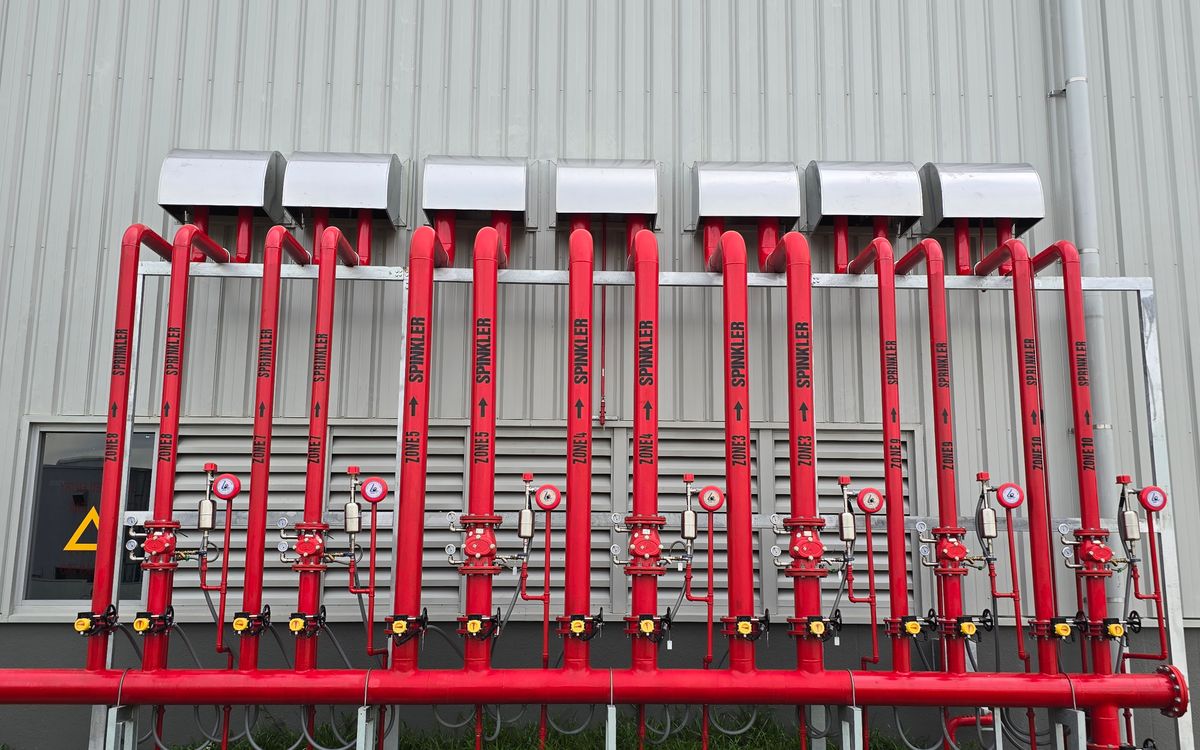
A sprinkler riser is equipment in the fire and life safety category. The vertical supply assembly of a water-based fire protection system, subject to periodic inspection and testing.
Also called: fire sprinkler riser, riser, wet pipe riser, dry pipe riser.
Governing standards
Required artifacts
| Artifact | What it does |
|---|---|
| Inspection tag | An inspection tag is a compliance consumable affixed to equipment that records who serviced it, when, and under what licence. |
| Placard | A placard is a compliance consumable displayed at equipment or on a premises to satisfy a posting requirement. |
Which of these you actually need, and on what cycle, depends on your jurisdiction. We publish that only where we have read the governing clause and can cite it. Where we have not, the page says so rather than guessing.
In stock for sprinkler risers
What it is
The vertical pipe that feeds a sprinkler system, with its control valve, alarm check or dry pipe valve, gauges and drain. Everything about the system that a firefighter or an inspector needs is at the riser.
Why it gets inspected
The commonest failure in a sprinkler system is a closed control valve - not a burst pipe, not a failed head, a valve somebody shut and forgot. A closed valve renders the whole system decorative while every other part of it remains perfect.
What happens on a visit
Confirm the control valve is open and secured, read the gauges above and below the alarm valve, check for corrosion and leaks, and test the water flow alarm. Anything that changed since the last visit gets written down.
What drives the tag count
The riser is where the system is exercised: main drain test, gauge readings, and valve position all happen here. A standpipe by contrast is a delivery path inspected for different conditions, even though both sit under NFPA 25.
What actually gets tagged, and where it goes
The riser is the point where the system is inspected, drained and tested, so it accumulates tags rather than carrying one. Separate artifacts cover the main drain test, the control valve position, and the inspection itself, and in many buildings a tag also hangs on each control valve to record that it is open and supervised. Tags are wired rather than adhered, because riser rooms are damp and the valves get operated. Where a building has several risers, each is tagged independently: a building level tag on the nearest riser to the door is a shortcut that makes a missed riser invisible.
What a scan of sprinkler risers shows
A scan of a riser shows which system it serves, its inspection history and its drain test results over time, which is the part that matters and the part a tag cannot hold. Main drain readings only mean something as a series: a single static and residual pressure pair tells you almost nothing, while the same pair trending downward over three years indicates a developing supply problem. Keeping those readings against the riser rather than in a contractor binder is what makes the trend visible to the building owner rather than only to whoever happens to hold the file.
Every artifact here is serialised, so the record survives the tag being replaced. The mechanics are on how inspection records work.
Sizing an order for a fleet of sprinkler risers
Count risers and control valves, not buildings, and expect several tags per riser per year given the separate weekly, monthly, quarterly and annual activities. A property with a handful of risers still consumes tags steadily because the frequencies stack. Order to cover a full year of the highest frequency activity you actually perform, then reorder annually rather than trying to time smaller batches, since the imprint does not change and split orders cost more per unit than the storage is worth.
Minimum is 100 units and every price is on the page, so a first order can be a test rather than a commitment. Why the minimum is 100, not 2,500.
Inspected on the same visit
A riser is one component of a water-based system rather than the whole of it. The same inspection visit normally reaches the standpipe outlets and, where the building has one, the fire pump, because they are part of the same system on overlapping frequencies. The backflow assembly protecting the supply is frequently tested at the same time by the same company. Sizing an order for risers alone is how a company runs out of standpipe tags halfway through a building, so count all four together and order once.
Ordering sprinkler risers: common questions
Do I tag each riser or the building?
Each riser, and each control valve. A building-level tag on the riser nearest the door is a shortcut that makes a missed riser invisible, because the building reads as current while one system has not been touched. Separate records mean the stale one stands out.
Why keep drain test readings rather than just dates?
Because the readings only mean something as a series. A single static and residual pressure pair tells you very little. The same pair trending downward across three years indicates a developing supply problem. A tag has no room for a series, which is why those readings normally end up in a contractor binder the building owner never sees.
How many tags does a riser consume in a year?
More than people expect, because the frequencies stack. Weekly, monthly, quarterly and annual activities each produce evidence, and separate artifacts cover the main drain test, the control valve position and the inspection itself. Size the order against the highest frequency activity you actually perform across a full year.